
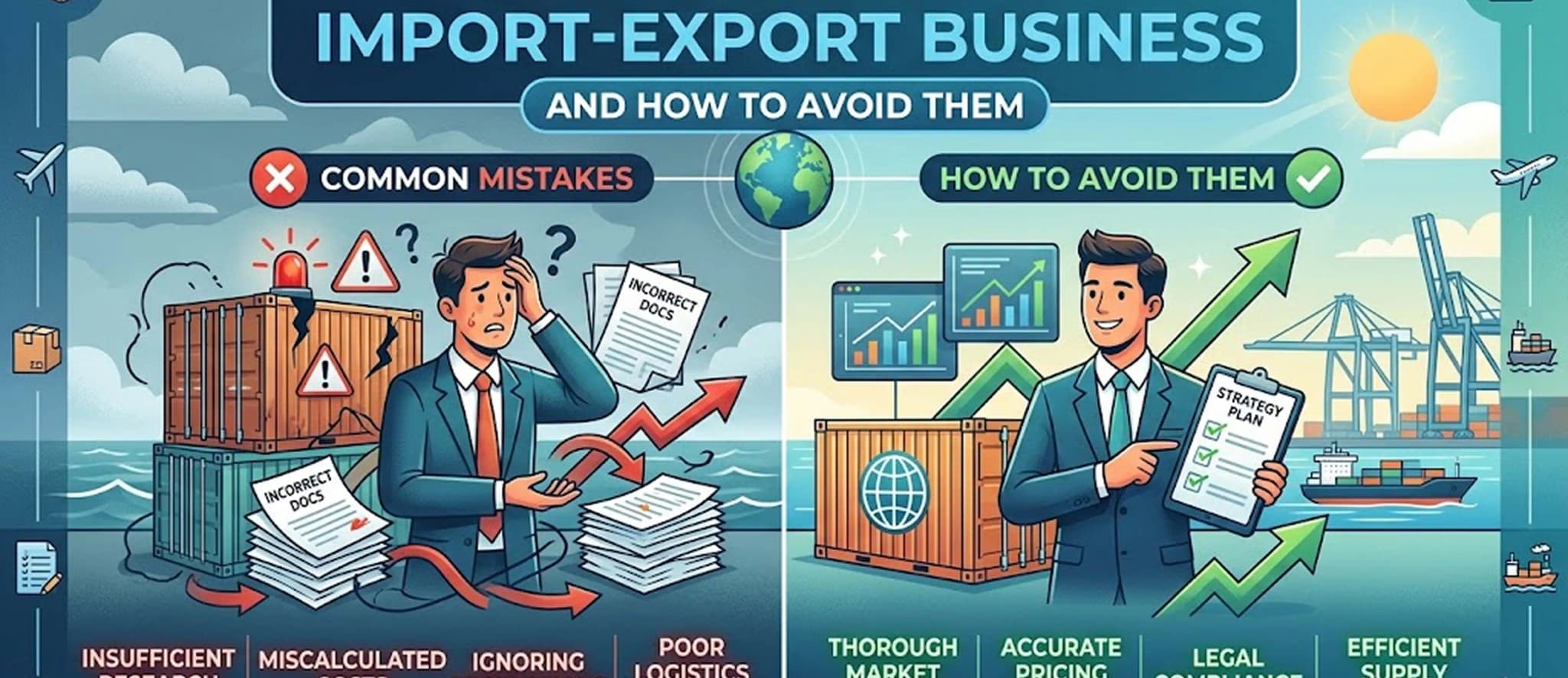
Common Mistakes in Import Export Business and How to Avoid Them
Starting an import–export business can be highly profitable, but it is not as simple as buying and selling products. Many new exporters and importers make avoidable mistakes that lead to losses, delays, or even legal problems.
In 2026, with increasing competition and stricter global trade rules, avoiding mistakes is more important than ever. This blog explains the most common mistakes in the import–export business and how you can avoid them.
1. Starting Without Proper Market Research
One of the biggest mistakes is choosing a product without understanding demand.Many beginners select products based on assumptions instead of data. This leads to low sales or unsold inventory.
- Study demand in target countries
- Check competition and pricing
- Start with one product instead of many
2. Ignoring DGFT Rules and Compliance
Many businesses do not fully understand DGFT rules, export policies, or licensing requirements.This can result in shipment delays, penalties, or rejection at customs.
- Understand DGFT regulations before starting
- Check if your product needs special licenses
- Keep updated with policy changes
3. Incorrect or Incomplete Documentation
Documentation errors are a major cause of delays in import–export.Even small mistakes in invoices or shipping documents can stop your shipment.
- Double-check all documents
- Maintain proper records
- Work with experienced consultants if needed
4. Not Verifying Buyers or Suppliers
Trusting unknown buyers or suppliers without verification is risky.Many businesses face payment fraud or receive low-quality goods.
- Verify company details and background
- Use secure payment methods
- Avoid large transactions without trust
5. Poor Pricing Strategy
Incorrect pricing can either reduce profits or make your product uncompetitive.Many exporters forget to include hidden costs like logistics, duties, and insurance.
- Calculate total export cost properly
- Include shipping and taxes
- Compare pricing with competitors
6. Choosing the Wrong Logistics Partner
Logistics plays a major role in international trade.Choosing an inexperienced freight forwarder or customs agent can cause delays and extra costs.
- Work with reliable logistics partners
- Check their experience in your product category
- Ensure they understand export procedures
7. Ignoring HS Code and Product Classification
Incorrect HS code classification can lead to wrong duty calculation, penalties, or shipment rejection.- Use the correct HS code for your product
- Take expert advice if unsure
- Verify classification before shipping
8. Lack of Knowledge About Payment Methods
Many new exporters do not understand international payment systems and take unnecessary risks.- Use safe payment methods like LC or advance payment
- Avoid unsecured transactions
- Understand foreign exchange rules
9. Not Updating IEC and Business Details
IEC code is required for import–export, but many businesses forget to update their details regularly.This can lead to deactivation and business interruption.
- Update IEC profile regularly
- Keep business details accurate
- Monitor DGFT notifications
10. Trying to Scale Too Fast
Many beginners try to expand too quickly without understanding the market.This leads to operational problems and financial losses.
- Start small
- Build experience gradually
- Focus on one market before expanding
Conclusion
The import–export business offers great opportunities, but success depends on avoiding common mistakes.- Do proper market research
- Follow DGFT rules and compliance
- Maintain accurate documentation
- Choose reliable partners
- Focus on safe transactions
With the right approach and careful planning, you can avoid costly errors and grow your business successfully in international markets.